
In Capaccio Paestum, ancient archaeology sits alongside a centuries-old rural heritage rooted in Mediterranean water buffalo farming and the production of Mozzarella di Bufala Campana DOP. Planning a weekend with children here means enjoying flat, open spaces, well-equipped educational farms, and ancient sites that are easily accessible with pushchairs.
The best time to visit is spring, between April and June, or early autumn, between September and October. During these months, temperatures allow you to explore the ruins comfortably without suffering from the lack of shade. Early autumn usually brings the Festival Internazionale delle Mongolfiere di Paestum, an event that gathers dozens of hot-air balloons launching over the archaeological area, complete with tethered flights for little ones in the adjacent flat fields. Exact dates change every year, so it is best to check the event's official website.
Logistically, a car remains the most practical way to travel between the coastline, the hill of Capaccio, and the various dairies, with drives rarely taking more than fifteen minutes. For millennia, the area has cherished the symbol of the pomegranate, or 'granato'—an emblem of fertility worshipped in antiquity alongside the goddess Hera and adopted today into local Christian devotion. If you are looking for a convenient base, places like the Oleandri Resort Paestum help keep travel times to the main stops to a minimum.
The ideal pace for three days in Capaccio
Day 1 — Morning archaeology and walks along the ancient walls
Morning
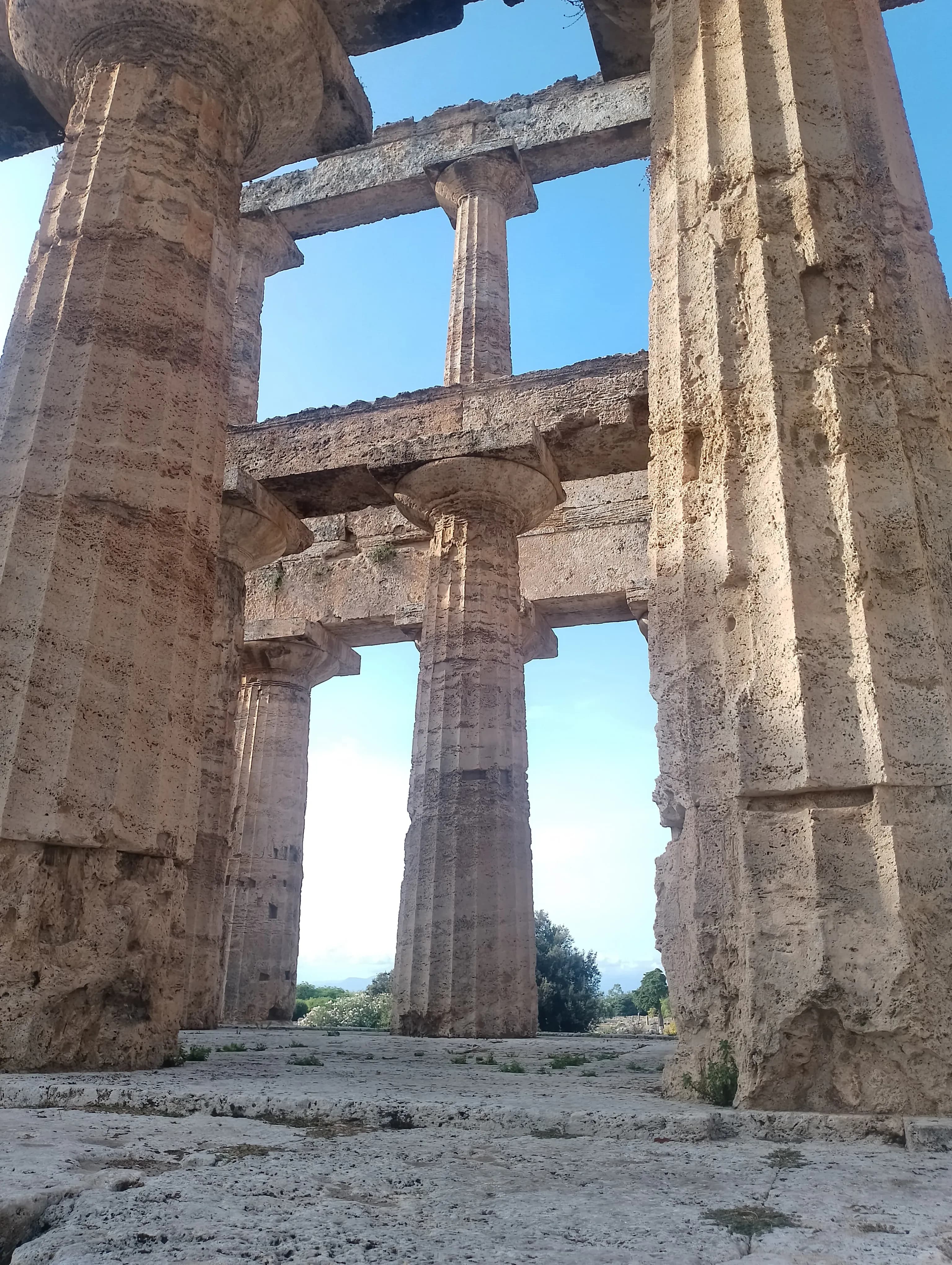
The archaeological site has almost no shade. For this reason, it is best to arrive at the entrance of the Parco Archeologico di Paestum as soon as it opens, around 08:30, carrying a water bottle, sun cream, and a sun hat. The main paths accommodate pushchairs, making for an easy two-hour stroll between the Tempio di Nettuno, the Tempio di Hera, and the Tempio di Atena. Inside the site, you will find the Parco dei Piccoli di Paestum, a free educational play area where children can explore ten installations inspired by ancient games and replicas of Greek construction machinery, such as Archimedes' screw.
Afternoon
When temperatures climb, head indoors to the Museo Archeologico Nazionale di Paestum. The route through the collection is very manageable for families, taking about an hour and a half to see the Magna Grecia artefacts and the painted slabs of the Tomba del Tuffatore. In the mid-afternoon, head towards Strada Statale 18 to reach Caseificio Il Granato. It is a casual spot with outdoor tables serving caciocavallo, brioche, and buffalo milk gelato. In the grounds, animals including horses and little donkeys are sure to delight the children.
Evening
Before the sun sets, the nearly five kilometres of megalithic ramparts along the Mura Antiche e Porta Sirena provide plenty of room for a short stroll. The circuit still preserves its monumental gates. To round off the day up in the hills, the Borgo Antico di Capaccio Capoluogo offers cooler air and a network of pedestrian cobbled alleys, well away from the heat of the coast.
Day 2 — Educational farms and grazing buffaloes
Morning
Spend the morning in Contrada Vannulo at Tenuta Vannulo. Advance booking is required for guided tours of this organic farm, which take groups to see buffaloes grazing in the fields and barns fitted with massaging showers. On site, you will also find a rural museum and a leather workshop. Before leaving, pop into Yogurteria e Degustazione Vannulo for a quick treat: the counter serves puddings, gelato, and yoghurt made exclusively with organic buffalo milk.
Afternoon
On Via Spinazzo, visit LabPaestum c/o Azienda Agribios. Here too, advance booking is essential for the hands-on workshops tailored for children. Activities last from one to three hours and range from mock archaeological digs to traditional Cilento breadmaking, as well as the basics of caring for animals on an educational farm.
Evening
For dinner, head to Località Gaudo for Ristorante e Caseificio Tempio, set within its own working farm. The menu features buffalo meat and fresh mozzarella, rounded off by an artisanal ice cream parlour. A play area right next to the tables means children can run around safely while the grown-ups finish their meal.
Day 3 — From the hilltop sanctuary to the seaside pine woods
Morning
The first stop requires a drive up towards Monte Calpazio and Capaccio Vecchia to reach the Santuario della Madonna del Granato. A visit takes around 45 minutes: the church overlooks the entire plain and the gulf, keeping the pomegranate symbol alive where the sanctuary of Hera once stood. Heading back down towards the valley along Via Rettifilo, Caseificio Rivabianca welcomes families with an accredited educational tour. Children can see the young calves in the barn and follow the technical stages of stretching the curd.
Afternoon
Spend the middle of the day in Licinella-Torre di Paestum. The Spiaggia di Licinella e Pineta features a wide sandy shore and particularly shallow water, making it safe for non-swimmers. The pine woods stretching directly behind the beach provide welcome shade—ideal for setting up a picnic and letting little ones nap in their pushchairs out of the direct sun.
Evening
For your final meal of the weekend, head to Via Laura and dine at Ristorante Da Nonna Sceppa. This historic restaurant is deeply rooted in Cilento culinary traditions. The setting includes a portico and a generous garden, and the staff provide highchairs to make dining with children entirely stress-free.
Tips for planning your time and tickets
- When it comes to tickets, opt for the official archaeological parks pass. It is valid for three days and covers entry to Paestum, the site of Velia, and the Museo Archeologico. Since under-18s enter for free, the overall cost for a family remains very reasonable.
- Distances between the ruins, the coast, and the rural hamlets are short, ranging from five to fifteen minutes. A car is the easiest way to manage pushchairs and children's daily routines. Arriving by train brings you to Paestum station, a 10 to 15-minute walk from the temples, but leaves you reliant on other transport for the farms.
- Factoring in free state-run sights for children and casual lunches at the dairies, the average daily spend on food and admissions—excluding accommodation—is roughly €35 to €60 per person.
Where to stay across the plain
A four-star resort surrounded by pine woods, featuring a kids' club and a swimming pool tailored to younger guests.
View on Booking →A family-oriented property offering a beach shuttle, low-key entertainment, and a swimming pool with water fountains.
View on Booking →A four-star hotel built right on the beach, in a convenient spot for getting to the archaeological area.
View on Booking →