

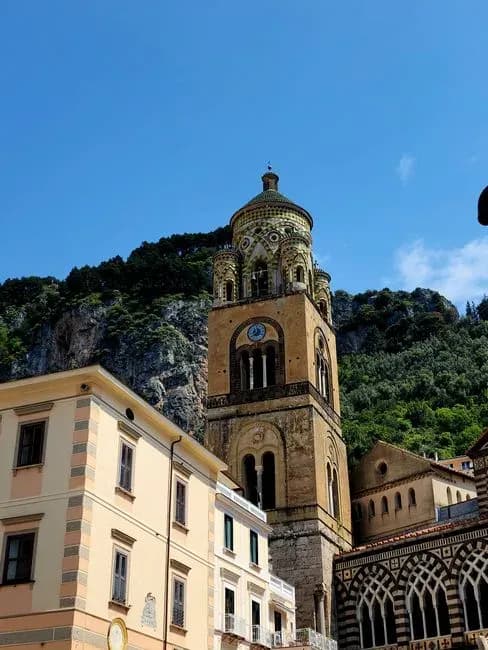
The months from April to early June, and the weeks between September and October, offer the finest temperatures for walking along the coast of Campania. At these times of year the stifling heat eases off, ferries run regularly, and the city remains far more affordable than the nearby seaside resorts. Salerno develops along two parallel tiers: up above, the bare stone of castles and hillside terraces; down below, the flat sweep of the sea and the port's concrete docks. Distances are never daunting, but the steep incline between the coastline and the upper quarters calls for an unhurried pace and thoughtful planning, grouping sights by altitude and neighbourhood.
Your first glimpse of the urban layout makes it immediately clear that history here is not confined to a single archaeological enclave. Baroque palazzi stand shoulder to shoulder with 11th-century buildings, while bold new complexes by contemporary architects look straight across at historic customs houses. If you want a practical logistical base, consider options such as B&B Salerno Centro to stay right by the pedestrian precinct, or GuestHost - B&B Lungomare Centro if you prefer having the water just steps away. Traffic along the coastal road demands real patience, so anyone using the city as a base for exploring the region should stick to travelling by boat or train, reserving the car only for absolute necessities.
How to plan four days in the city
Day 1 — The cathedral and the 19th-century promenade
Morning
The historic centre gathers its foremost religious landmarks within just a few blocks. Begin your morning with a visit to the Cattedrale di San Matteo (Duomo di Salerno). Dating from the 11th century, this Romanesque building welcomes visitors through a spacious four-sided porticoed atrium. The visit takes about an hour, culminating in the descent into the polychrome Baroque crypt, where the relics of San Matteo rest. After leaving the Duomo, head across Largo Plebiscito into the Museo Diocesano San Matteo. Set within the former Seminario Arcivescovile, it houses the renowned medieval cycle of the Salerno Ivories; allow roughly an hour here too. A short walk away along Via Duomo brings you to the Chiesa di San Giorgio. Its naves reveal a dense array of polychrome marbles, stuccoes and 17th-century frescoes, creating one of the most striking Baroque interiors in the entire province.
Afternoon
After lunch, make your way along Via dei Mercanti. Inside Palazzo Pinto you will find the Pinacoteca Provinciale di Salerno, displaying canvases from the Renaissance to the 20th century alongside a dedicated section on foreign artists who journeyed through the Amalfi Coast. Further down the same street, Pasticceria Pantaleone 1868 occupies the premises of a deconsecrated chapel, that of the Anime del Purgatorio. Its counter is filled with classic 19th-century pastries from Campania, including the celebrated Scazzetta del Cardinale, topped with wild strawberries. Leaving the narrow alleys behind, head downhill towards Via Roma for a stroll through the Villa Comunale di Salerno. Its 19th-century avenues, lush with dense greenery, lead to the Fontana di Don Tullio. In winter, this park becomes the beating heart of the Luci d'Artista light installations.
Evening
Before dinner, the wide expanse of Piazza della Libertà, right on the waterfront, provides a sweeping walk beneath the semicircular curve of the Crescent. For dinner, delve back into the old alleys: Vicolo della Neve Trattoria Antica Pizzeria sets its tables a short stroll from the cathedral. The menu revolves around wood-fired baking, stuffed spleen and traditional salt cod dishes, staying faithful to the area's rural and seafaring heritage.
Day 2 — Medical science and defensive hilltop walls
Morning
Your morning starts with the climb towards the Plaium Montis district. The Giardino della Minerva is the very site where masters of the Scuola Medica Salernitana once cultivated herbs and botanicals for therapeutic use. Its medieval terraces gaze straight out over the sea; allow an hour and a half to explore every level. Your entry ticket also grants admission to the Museo Roberto Papi, housed within Palazzo Galdieri in the old town. Its display showcases an extensive collection of medical and surgical instruments dating from the 17th to the 19th centuries, tracing the practical history of medicine in Campania.
Afternoon
Early in the afternoon, ascend further to the 300-metre crest of Monte Bonadies. The Castello di Arechi keeps watch over the bay from its ridge. To reach the foot of this medieval fortress, catch bus number 19, which takes roughly 15 minutes; if you prefer to walk, a trail leads up through the pine woods, requiring about 30 minutes of steep uphill trekking. The site features a small archaeological museum and courtyards looking directly over the water. Exploring the ramparts and interior halls will take between an hour and a half and two hours, including the descent.
Evening
For dinner, head to the neighbourhood around Via Antonio Genovesi, tucked behind the cathedral. Ristorante Cicirinella serves classic local seafood. Space inside is tight and tables are few, making it essential to book a few days ahead to secure a spot. Staying at B&B In Centro Storico Salerno ensures an effortless walk back at the end of the evening, with no need for public transport or parking.
Day 3 — The Lombard era and the new waterfront
Morning
Salerno's early medieval layers reveal themselves in striking fragments. The Complesso Archeologico di San Pietro a Corte sits nestled amongst residential buildings. Beneath the medieval chapel and the palace built by the Lombards lie the remains of an earlier Roman thermal bath. Heading up Via Arce, you will walk alongside the stone arches of the Acquedotto Medievale. Constructed in the 9th century to bring water to the monastery of San Benedetto, this pointed-arch aqueduct is steeped in folklore, often linked to tales of the Devil's Bridges and the founding doctors of the Scuola Salernitana.
Afternoon
On Via San Benedetto, set within the walls of the original monastery, you will find the Museo Archeologico Provinciale di Salerno. Its rooms display artefacts from across the province, but the showstopper is the monumental bronze Apollo's Head, cast in the 1st century BC and hauled up by chance from the sea. After your visit, stroll down to Molo Manfredi. The concrete and glass curves of the Stazione Marittima di Salerno, designed by Zaha Hadid to evoke the shape of an oyster shell, catch the late afternoon glow. Take time to wander both inside and around it at sunset.
Evening
From the pier, it is a short walk to the Spiaggia di Santa Teresa. This small sandy cove folded into the cityscape features a wooden decking solarium framed by palm trees. It is a favourite local spot to pause as the sun dips towards the horizon. For dinner, make your way over to Corso Garibaldi for a table at Pescheria Ristorante, where the menu is dictated solely by each day's fresh local catch, pairing cooked seafood dishes with lavish platters of crudités.
Day 4 — The grand tree-lined boulevards by the sea
Morning
Your final day eases into a gentler rhythm along the coastline. The Lungomare Trieste runs in a straight line through the city, with the sea on one side and stately palazzi on the other. Lined with tall palms, this wide promenade links the historic centre to the Masuccio Salernitano marina. It is the best stretch for getting a feel for the city's scale, walking on entirely flat ground with no slopes in sight. Staying at gia'Notte BB Salerno Centro puts you right between this pedestrian boulevard and the nearby railway station, making luggage handling wonderfully simple.
Afternoon
Spend the afternoon soaking up the port, watching boats come and go. From the quays you can follow the steady movements of hydrofoils and admire the distant silhouette of the nearby coast. With no rigid museum schedules to meet, use these remaining daytime hours for an easy stroll along Via Roma or Corso Vittorio Emanuele, stopping for a coffee without any rush.
Evening
For your final dinner, return to Corso Garibaldi to eat at Casamare. The kitchen describes its cooking as heartfelt coastal fare, serving an imaginative range of raw and cooked fish antipasti followed by rich seafood pasta dishes. Its clean flavours and refined setting offer a fitting finale to four days, bringing the best of the local fish market straight to the table.
Practical tips and essential logistics
- For day trips to the Amalfi Coast towns, stick strictly to ferries and hydrofoils leaving from Molo Manfredi or Molo Masuccio Salernitano. The crossing to Amalfi or Positano takes 30-40 minutes and spares you the notorious tailbacks and chronic lack of parking along the SS163.
- At Giardino della Minerva, purchase the €6 combined ticket: in addition to the botanical garden, it covers admission to the Museo Roberto Papi and the virtual museum of the Scuola Medica Salernitana, bringing down your total sightseeing costs.
- If driving at weekends, or between November and January during the Luci d'Artista light festival, steer well clear of the ZTL cameras around the medieval quarter. To avoid fines and queues, head straight for the underground car parks near the station or beneath Piazza della Libertà.
- To budget for your weekend, allow an average of €40 to €60 per person per day, excluding accommodation. This will cover meals at city-centre trattorie, seafood dinners, local bus fares, and admission to museums, which generally cost between €3 and €6.
Where to stay in Salerno
Rooms set inside a 16th-century former convent, situated right in a convenient pedestrian zone.
View on Booking →An excellent base among the historic alleys, just moments from the city beach of Santa Teresa.
View on Booking →A central, practical stay, just over half a kilometre from the central station for arrivals by train.
View on Booking →