

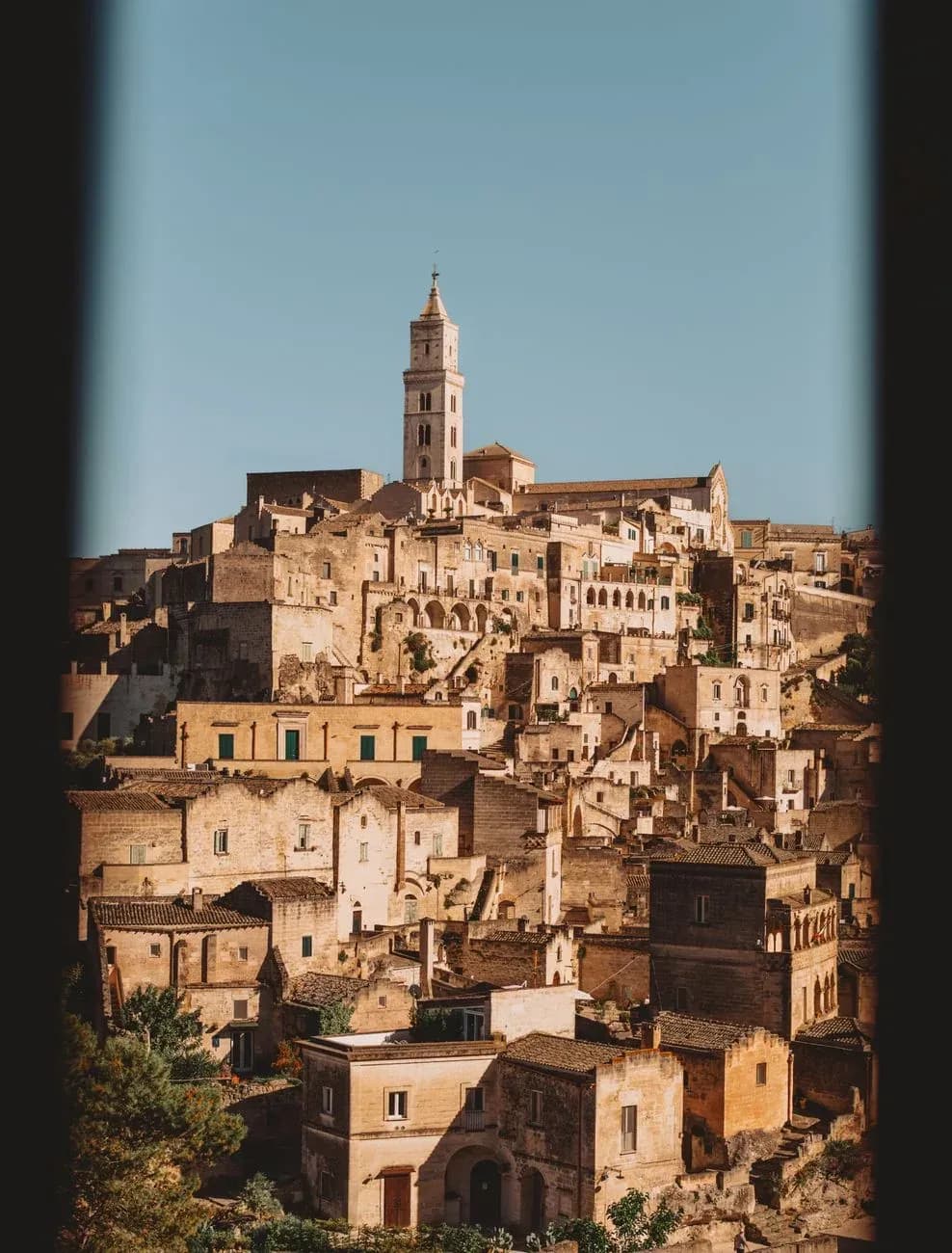
The Basilicata region sets its own pace. Local roads cut across badlands, plateaus and woodland, with constant changes in elevation that make a car or campervan the only truly practical way to cover the distances. Public transport between mountainous areas and inland villages is virtually non-existent, and journey times stretch out due to the endless scenic ups and downs.
Planning your stages calls for careful attention to the seasons. From May to October, the weather is ideal for tackling hikes in the Pollino massif, stopping off at lakes and wandering through historic villages. From December to March, with heavy snowfalls, the mountain spine transforms completely to welcome winter sports enthusiasts, especially at the Comprensorio Sciistico Sellata - Monte Pierfaone, which sits between 1350 and 1740 metres above sea level, or along the snowshoe trails around Lago Laudemio e Massiccio del Sirino.
How to organise your long weekend
Day 1 — From the Vulture crater to the stone cellars of Pietragalla
Morning
The itinerary kicks off in the north of the region, at the foot of Monte Vulture. Here you will find the Laghi di Monticchio, two volcanic lakes — Lago Piccolo and Lago Grande — cradled by the wooded slopes of an extinct crater. The area is wonderful for strolls along the shores or an outing by pedal boat. Perched right above Lago Piccolo, the gleaming white architecture of the Abbazia di San Michele Arcangelo catches the eye. Built directly into Basilian caves, the complex now also houses the Vulture natural history museum.
Afternoon
Heading south towards the regional capital, it is well worth detouring to the Parco Urbano dei Palmenti di Pietragalla. This site features over two hundred ancient stone structures, today largely carpeted with grass. In the past, they were used for pressing grapes and fermenting must. Exploring the site calls for proper footwear, essential for navigating the uneven stone blocks.
Evening
For dinner, once you reach Matera, head to Trattoria Stano in the city's historic centre. The menu focuses on authentic local cuisine: try the orecchiette alla murgiana with cardoncelli mushrooms, braciola in ragù, or the classic mutton 'pignata'.
Day 2 — Matera, abandoned villages and Magna Graecia
Morning
Exploring the Sassi di Matera e Chiese Rupestri will easily take up your entire morning. Navigating this UNESCO-listed maze of cave dwellings and rock-hewn architecture requires at least 3–4 hours on foot. Constant elevation changes, cobbled lanes and steep limestone steps make sturdy hiking shoes an absolute must to avoid slipping on worn, polished stone. The area is mainly split between Sasso Caveoso and Sasso Barisano.
Afternoon
In the early afternoon, drive towards the Lucanian badlands to reach Craco Borgo Fantasma. This medieval town was entirely abandoned following a landslide in the 1960s. Access is only permitted via a dedicated guided tour, with safety helmets provided to explore the ruins securely. Afterwards, head out towards the Ionian coast to see the Tavole Palatine e Parco Archeologico di Metaponto, home to the monumental remnants of a 6th-century BC Doric temple dedicated to Hera. Heading back towards Matera in time for sunset, make a stop at the Parco della Murgia Materana e Belvedere di Murgia Timone (in Contrada Murgia Timone). This plateau offers an uninterrupted front-on view of the Sassi and is criss-crossed by paths that skirt rock-cut churches and prehistoric caves.
Evening
Round off the day at Trattoria del Caveoso, carved entirely out of the tufa rock right inside Matera's Sasso Caveoso. House specialities include crapiata lucana, homemade orecchiette and a selection of local meats, perfectly paired with a glass of Aglianico wine.
Day 3 — Adrenaline in the Dolomiti Lucane
Morning
Day three is all about the inland peaks of the Dolomiti Lucane. Start at Castelmezzano e Gradinata delle Dolomiti Lucane, a village perched dramatically among sandstone spires. Besides wandering through its charming streets, an uphill path leads to the ruins of a Swabian castle. From here, or from neighbouring Pietrapertosa, you can take on Il Volo dell'Angelo, a high-wire zip-line that sends you flying across the valley between the two villages at around 120 km/h. As it is extremely popular, advance booking is essential to secure your slot.
Afternoon
Continue on to Pietrapertosa e Castello Saraceno. At over 1000 metres above sea level, this is the highest municipality in Basilicata, crowned by the remains of a Saracen fortress carved straight into the sandstone. Next, drive to Sasso di Castalda to cross the Ponte alla Luna. This Tibetan suspension bridge hangs roughly 96 metres above the Arenazzo gorge and stretches for an impressive 300 metres.
Evening
Head back to Castelmezzano for dinner. A great option on Corso Vittorio Emanuele III is Trattoria dal Vecchio Scarpone, a rustic spot renowned for hearty homemade pasta. Alternatively, tucked away on Vico I Maglietta is Al Becco della Civetta, recommended in the Michelin Guide, serving dishes like peperoni cruschi, cavatelli with pezzente sausage and cuts of local Podolica beef.
Day 4 — The Pollino massif and crystal-clear waters
Morning
Your final stage focuses on the Parco Nazionale del Pollino. The main highlight is Monte Pollino e Sentiero dei Pini Loricati. Setting out from Colle dell'Impiso near Rotonda, the trail climbs towards Colle Gaudolino before reaching the peaks where ancient Bosnian pines stand proud. It is a demanding route that takes about 7–8 hours round trip, best suited to experienced, fit hikers.
Afternoon
If you prefer a gentler alternative or want to unwind in the afternoon, opt for Acquatrekking nel Fiume Mercure, based in Viggianello. This guided adventure involves wading upriver using waterproof waders and technical boots provided on-site, designed to let you navigate the riverbed with ease.
Evening
In Viggianello, stop by Ristorante Agriturismo Masseria Campolerose, which serves zero-kilometre dishes crafted by chef Antonio Tedesco, featuring fresh pasta and traditional Pollino country recipes. Alternatively, in Rotonda at Corso Garibaldi 13, you will find Ristorante da Peppe, led by Flavia De Marco: a cornerstone of the Slow Food Alliance, ideal for sampling the local PDO red aubergine of Rotonda and white beans.
Practical tips for planning ahead
- If you are touring in a campervan, the area is well set up for you: there are plenty of municipal and agriturismo-run sites where you can pitch up affordably, such as Area Sosta Camper Masseria Radogna at Murgia Timone, which lets you walk into Matera while leaving your vehicle safely outside the ZTL.
- High-altitude attractions like the Volo dell'Angelo or the Ponte alla Luna must be booked online well in advance, otherwise you run a very high risk of finding them completely sold out at weekends.
- Good grip is vital: hiking shoes with a technical sole are essential not just for mountain paths, but also for tackling the polished stone steps of Matera without slipping.
Where to stay
Right in the heart of the Dolomiti Lucane, strategically placed if you are planning to experience the Volo dell'Angelo.
View on Booking →A scattered hotel set among the village streets, ideal as a base for long hikes across the Pollino massif.
View on Booking →Just a short drive from the Laghi di Monticchio and the abbey, handy for exploring the volcanic north.
View on Booking →