

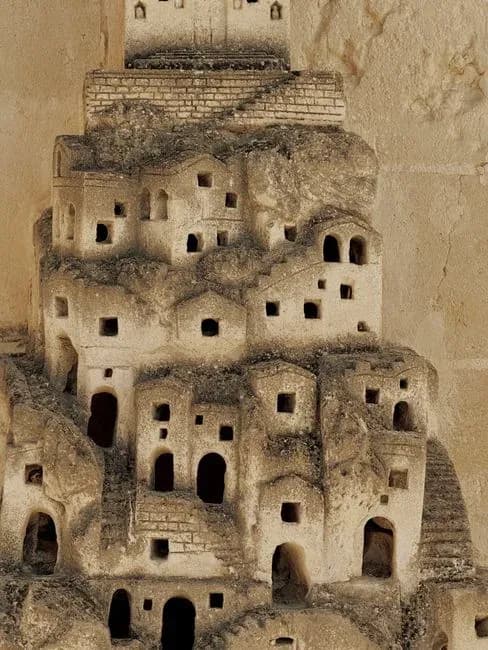
Matera demands comfortable shoes and no watch on your wrist. Here, time is marked by the slopes and the shifting colour of the tufa as the sun sinks lower. If you can, plan your weekend in the shoulder seasons, between April and June or in autumn: you will avoid both the fierce summer heat beating down on the stones of the historic quarters and the damp chill of winter when heading underground into the hypogea.
The right pace is a slow one, yielding to the stubborn geography of a place where one house's roof often serves as the street for the one above. You get around entirely on foot, tackling continuous slopes and slippery cobbles. You must leave your car behind in the guarded or multi-storey car parks outside, such as the ones in Via Vena or Piazza Cesare Firrao, as the Sassi di Matera and the modern centre on the Piano are a camera-controlled ZTL. To truly understand the city, you have to get used to exploring below street level, where enormous water cisterns and rock churches open up directly in the belly of the hill.
A three-day itinerary in Matera
Day 1 — The dizzying Caveoso and the first cave dwellings
Morning
Start by exploring the Sasso Caveoso, diving straight into what everyday and religious life looked like until the last century. Your first stop is the Complesso Rupestre Madonna de Idris e San Giovanni in Monterrone. Step inside these churches carved directly out of the rocky spur of the Idris: the visit takes about half an hour, with admission between 9:30 and 19:30. A short walk away, still in the Caveoso, is the Storica Casa Grotta di Vico Solitario, open all day without a break. In roughly twenty minutes, it showcases original tools and period furnishings, illustrating what peasant life was like before the evacuation of the Sassi.
Afternoon
Having gained an insight into domestic life, turn back to ancient frescoes. Continuing through the Caveoso, your route leads to the Chiesa Rupestre di Santa Lucia alle Malve. Once an 8th-century female monastery, today it houses remarkable frescoes; the site is open daily from 9:30 to 19:30 and takes about thirty minutes. From here, begin climbing towards the Civita, the city's highest point, to reach the Basilica Cattedrale di Matera. This 13th-century Apulian Romanesque cathedral offers sweeping views over both Sassi. It is open from 9:00 to 19:00, though keep in mind that tourist visits are suspended on Sunday mornings between 10:00 and 12:30; allow around 45 minutes to see it.
Evening
For dinner, staying in the Sasso Caveoso area, Trattoria del Caveoso at Via Bruno Buozzi 21 serves traditional Lucanian dishes in dining rooms carved into the rock. Specialising in local cuisine paired with Aglianico wines, it requires advance booking for the evening. Alternatively, just a short walk away at Via Bruno Buozzi 11, L'Abbondanza Lucana is a historic restaurant focusing on local produce, including meats, cicerchie, and reinterpreted peperone crusco.
Day 2 — Hidden cisterns and the Barisano quarter
Morning
Head this morning towards Piazza Vittorio Veneto and the Centro al Piano, where the main attraction doesn't rise into the sky but plunges into the earth. The Palombaro Lungo is a colossal cistern dug beneath the main square, often dubbed a true 'cathedral of water'. No booking is required: it is open from 10:00 to 13:00 and from 15:00 to 18:00, and you can explore it independently in about fifteen minutes with the help of the provided brochure. Once back above ground, head down into the Sasso Barisano to visit the Vicinato a Pozzo. Open from 9:30 to 19:00, this underground space illustrates the ancient rainwater-harvesting system and the communal life of Matera's courtyards in a visit of about 30 minutes.
Afternoon
Stay in the Sasso Barisano for another essential religious landmark: the Chiesa Rupestre di San Pietro Barisano. This is the largest rock church in the city, distinguished by its 18th-century façade and network of underground hypogea. Entry is generally between 10:00 and 19:00, allowing up to forty-five minutes to take it all in at leisure.
Evening
To dine in the Sasso Barisano, head to Via Casale 24 for La Locanda nei Sassi, an osteria set within a thousand-year-old cave, serving handmade orecchiette, cavatelli, and Lucanian ragù. Booking is essential. Another nearby option is Osteria San Giovanni, housed in a deep stone hypogeum adjacent to the church of the same name, particularly famous for its terracotta-baked 'pignata' and bread meatballs.
Day 3 — Descending into the Gravina and the plateau
Morning
Your final day leaves the built-up area behind to venture into the rugged wilderness surrounding the city. From Porta Pistola, set out on the Sentiero 406 e Ponte Tibetano sulla Gravina. This is an adventurous trek graded for expert hikers (EE). The trail drops steeply, crosses the canyon via the suspension bridge, and climbs up towards the plateau. You will need an entry ticket, and the return hike takes between two and three hours.
Afternoon
Across the canyon, you enter the Parco della Murgia Materana e Belvedere di Murgia Timone. If you prefer not to hike from the city, the plateau is also accessible by car in about 15 minutes via the SS7, passing the Centro Visite Jazzo Gattini. For those who booked at least 24 hours in advance, guided two-hour tours depart from Jazzo Gattini to the Chiese Rupestri di San Falcione e Madonna delle Tre Porte, clifftop sanctuaries perched right on the rim of the Gravina and decorated with medieval and Byzantine frescoes. Sunset is without doubt the best time to be on the Murgia viewpoints, as the panoramic view opens up completely over the Sassi di Matera.
Evening
Back in the Sasso Barisano, enjoy dinner at Trattoria Stano (Via Santa Cesarea 67/69). It serves classic regional dishes alongside panoramic views, letting you dine while admiring the historic quarters lit up after dark.
Practical tips for your trip
- If you plan to tackle Sentiero 406 to the Gravina and the suspension bridge, be aware that the path is very slippery. You will need proper hiking boots with good grip and a supply of water. An entry ticket is required, and guided tours to the clifftop rock churches must be booked at least 24 hours in advance.
- To avoid overspending on individual admissions, pick up a combined ticket from the Oltre l'Arte circuit. It covers the churches of Santa Lucia alle Malve, Madonna de Idris, and San Pietro Barisano, substantially reducing your overall costs.
- Cars cannot enter the Sassi. Beyond leaving your vehicle in external car parks (such as Piazza Cesare Firrao or Via Saragat) and continuing on foot or via seasonal shuttle buses, simply accept that you will be walking a lot on steep cobbles—it is the only way to navigate the alleys.
Where to stay in the tufa quarters
Charming rooms set within spacious, masterfully restored caves in the oldest part of the quarter.
View on Booking →A scattered hotel that even conceals a subterranean thermal spa within its tufa walls.
View on Booking →An albergo diffuso offering independent lodgings carved and built directly into the living rock.
View on Booking →