

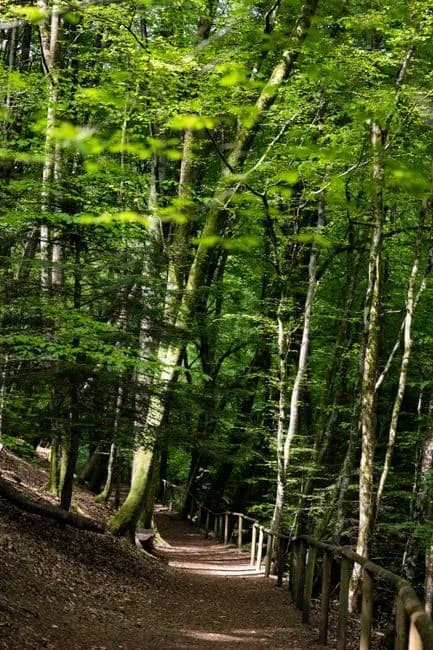
Arriving in Basilicata often means heading towards better-known destinations, leaving the regional capital aside. At over eight hundred metres above sea level, this city calls for comfortable shoes and an urge to explore. Its altitude guarantees cool evenings and mountain temperatures even in summer. To make the most of outdoor visits, the months of May, June, September and October prove to be the most suitable.
The itinerary over the coming days blends the city's intricate urban layout with the trails of the Appennino Lucano. Between record-breaking mechanised transport systems and woodland walks, the plan involves steady travel. Your days alternate taking in Roman ruins with hikes through ancient beech woods, joining remnants of the past with contemporary infrastructure.
How to plan your days in Potenza
Day 1 — From the valley floor to the upper quarters
Morning
Your visit begins in the lower part of town, around Porta Salza. To head up, take the Scale Mobili di Santa Lucia (Heaven's Stairs), open from 07:00 to 21:30. This stretch is around six hundred metres long and whisks you up to the historic centre in fifteen minutes, ranking among the longest mechanised systems in Europe. Once up top, make your way to the Cattedrale di San Gerardo. This neoclassical cathedral preserves the relics of the city's patron saint, frescoes and bronze portals; allow thirty to forty-five minutes to take in the interior. Straight after, carry on to the Chiesa di San Michele Arcangelo, a 13th-century Romanesque building. It houses several works of sacred art and warrants a stop of about half an hour.
Afternoon
After lunch, your route stays in the historic centre and focuses on the interiors of Palazzo Loffredo on Via Pretoria. The building houses the Museo Archeologico Nazionale della Basilicata Dinu Adamesteanu, which showcases artefacts and the history of ancient Lucania. It is worth setting aside an hour and a half to browse the rooms. Later on, head towards the highest point of the hill to see the Torre Guevara. This structure is the sole surviving part of a 15th-century medieval castle and offers sweeping views over the nearby valleys.
Evening
For dinner, choose Trattoria Triminiedd, located on Via del Popolo. The menu champions home-style recipes such as baccalà with peperoni cruschi and pasta e fagioli. As it is a long-standing local favourite, booking is strongly recommended for the evening. If you are staying nearby, for example at Grande Albergo Potenza, you can walk back to your room in just a few minutes.
Day 2 — 19th-century theatres and modern viaducts
Morning
The second day focuses on the capital's main hubs. The central focal point is Piazza Mario Pagano e Teatro Francesco Stabile. The square is considered the city's living room and is dominated by the silhouette of the 19th-century theatre, built as a scaled-down version of Napoli's Teatro San Carlo. A short walk away stands the Chiesa di San Francesco d'Assisi, founded in the 13th century. Inside, it preserves austere lines alongside a painting of the Martyrdom of Saint Sebastian by Giovanni Todisco.
Afternoon
Step outside the pedestrian area to head down towards the bed of the Basento river, where you will find the Ponte Musmeci (Ponte sul Basento). Crafted from sculpted reinforced concrete, it is considered a pioneering work of contemporary architecture and is protected by the Ministry of Cultural Heritage. From here, make your way towards Rione Malvaccaro to visit the Villa Romana di Malvaccaro. The remains of this 3rd-century AD structure illustrate an extra-urban estate of the era and feature preserved polychrome mosaic floors.
Evening
Spend the evening heading back into the centre for an out-of-the-ordinary dinner. Massimo Carleo Home Restaurant offers a creative take on local ingredients, serving tasting menus and risottos highlighted by the Gambero Rosso guide.
Day 3 — Rustic paths and underground cellars
Morning
From day three onwards, you will need a car to explore the Dolomiti Lucane. The first stop is the Percorso delle Sette Pietre, a trail of about two kilometres crossing the Caperrino gorge to link Castelmezzano with Pietrapertosa. The walk takes about an hour and a half.
Afternoon
Once you finish the hike, drive across to the territory of Pietragalla. Here you will find the site of the Palmenti di Pietragalla, a unique rural park made up of old cellars carved straight out of the tuff and rock. Draped in vegetation, these structures were used in the past for pressing grapes.
Evening
Heading back towards the city, stop for dinner in Contrada Botte at Trattoria Zi Mingo. This osteria stands out for iconic local recipes, including lagane e ceci (pasta with chickpeas) and Potenza-style lamb. After dinner, it is convenient to settle into accommodation close to the main arterial roads, such as Albergo Miramonti, for a straightforward night's rest.
Day 4 — Lucanian woods and dizzying heights
Morning
Your final day unfolds in the north, in the Valle di Vitalba at San Fele. The destination is the Cascate di San Fele, waterfalls created by the Bradanello stream amid woodlands and ancient fulling mills. Follow a circular hiking route of nearly six kilometres, which takes around two and three-quarter hours on foot.
Afternoon
In the afternoon, drive to Sasso di Castalda. Here you can tackle the Ponte alla Luna e Ponte Petracca, a Tibetan suspension bridge suspended one hundred metres up and three hundred metres long, culminating in a glass sky-walk. Crossing takes about an hour and a half. In the same area, you will also find the trailhead for the Sentiero Frassati della Basilicata e Monte Arioso, a mountain trail that climbs through the beech woods of Costara to reach the monumental beech tree of San Michele.
Evening
Book your final meal at Antica Osteria Marconi, on Viale Guglielmo Marconi. This gourmet venue pairs mountain traditions with modern cooking techniques, offering an excellent wine list to round off your weekend. Hotels such as Park Hotel Centro Congressi prove practical in this area if you need to drive off the following morning.
Tips for getting organised on the ground
- The historic centre sits at an altitude of eight hundred metres with intricate roads. It is best to leave your car in the lower car parks and make use of the free, covered lifts and escalators, such as the Santa Lucia escalators, which save both time and steep climbs on foot.
- Public transport between neighbouring towns, such as San Fele or the villages of the Dolomiti Lucane, is sparse. You will need your own or a hire car to cover these distances.
- The suspension bridge at Sasso di Castalda does not require advance booking at weekends; entry operates on a first-come, first-served basis. However, strict footwear rules apply: you must wear trainers or walking boots with a treaded grip to attach the safety harness.
- The Percorso delle Sette Pietre features steep stone steps and a 250-metre elevation gain. Tackling it in the morning or towards the evening is best; carry plenty of water and avoid direct midday sun.
- When it comes to spending, dining out remains affordable: a full lunch with regional specialities averages between €25 and €40. Woodland walks and entry to the waterfalls are free of charge.
Where to stay in the city
Historic, central four-star hotel, ideal for exploring the squares and museums on foot.
View on Booking →Tucked away in the alleys of the historic centre, offering quick access to the city cathedral.
View on Booking →Convenient for arrivals by car and mountain day trips, featuring private parking and surrounding gardens.
View on Booking →