

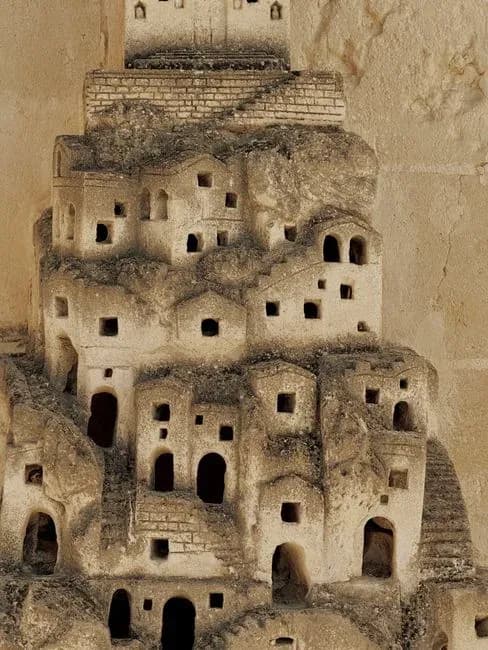
Matera is made of steep climbs, tuff-stone steps, and alleys devoid of shade. The best time to visit is from April to early June and from September to October, when the sun lets up; in summer, temperatures often exceed 38 degrees, making walking through the canyons grueling.
Good logistics make all the difference. The Sassi districts are entirely pedestrianised, and the steep climbs take their toll on your legs. A sturdy pair of shoes with good grip is essential for tackling the slippery flagstones and descending along the limestone cliff faces without twisting an ankle.
How to plan your three days
Day 1 — La Civita and the invisible Sassi
Morning
Start your day in Civita, the highest part of the city. Your first stop is Casa Noha: this FAI heritage site features a 30–40 minute video screening entitled 'I Sassi invisibili', an ideal way to grasp the city's complex history before exploring its districts. It's best to book your time slot in advance. Straight afterwards, head up to the nearby Cattedrale di Santa Maria della Bruna: the cathedral towers over the valley, offering a panoramic viewpoint across both districts below.
Afternoon
In the afternoon, make your way towards Piazza Vittorio Veneto to explore the Palombaro Lungo, a massive underground cistern designed to hold 5 million litres of water. The tour takes around 15–20 minutes; tickets are bought on site, and there may be a short wait. A short walk away, back towards Civita, MUSMA (Museo della Scultura Contemporanea Matera) displays contemporary art across the frescoed rooms and underground chambers of Palazzo Pomarici (closed on Mondays).
Evening
For dinner, stay in the historic centre and wander down Via Domenico Ridola to Il Pettolino, a bistrot serving piping-hot fried pettole and creative local specialities (closed on Mondays).
Day 2 — Sasso Caveoso and trekking in the Gravina
Morning
Spend the morning exploring Sasso Caveoso. Step inside Casa Grotta di Vico Solitario, a dwelling furnished with original household items that reveals what daily life was like here before the 1950s evictions; the visit takes about half an hour. Right afterwards, head to the Chiesa Rupestre di Santa Maria de Idris e San Giovanni in Monterrone, hollowed entirely out of the rocky spur and covered in frescoes (takes around 25 minutes). Then, take in the views of the valley below from outside the nearby Chiesa di San Pietro Caveoso.
Afternoon
From the church, head down towards Porta Pistola, the starting point for Sentiero 406 e Ponte Tibetano sulla Gravina. The route winds down into the canyon, crosses the steel suspension bridge, and climbs back up to the plateau of Murgia Timone. Take care: it is graded for experienced hikers, takes around two hours, and proper hiking shoes and plenty of water are strictly required. At the end of the trek, Belvedere di Murgia Timone offers the most iconic sunset view over Matera.
Evening
Back in Sasso Caveoso, Trattoria del Caveoso on Via Bruno Buozzi, set within the limestone rock, is the perfect spot to sample rustic fresh pasta and hearty dishes from Basilicata.
Day 3 — Underground chambers, ancient frescoes, and social architecture
Morning
On your final morning, head into Sasso Barisano to visit the Chiesa Rupestre di San Pietro Barisano, Matera's largest cave church, complete with underground catacombs carved out of the tuff. A short distance away lies Casa Cava, a former tuff quarry reimagined as an underground auditorium. Before leaving the centre, stop by Panificio Forno di Gennaro on Via Nazionale to pick up some wood-fired Pane di Matera IGP and tomato focaccia.
Afternoon
Take the car or a shuttle to explore the sights beyond the Sassi. In Contrada Pietrapenta, the Cripta del Peccato Originale houses 8th-century Benedictine-Lombard frescoes; you will need to book online well in advance, as visits are limited to 20 people at a time (duration 45 minutes). Afterwards, head towards Frazione La Martella to visit Borgo La Martella, designed in the 1950s by leading urban planners to rehouse families relocated from the historic quarters.
Evening
Heading back into Sasso Barisano, have dinner at Osteria Pico on Via Fiorentini, a cave-hewn eatery celebrated for its local meats, or call in at Dalla Padella alla Brace on Via Domenico Ridola for a mixed grill.
Top tips for your visit
- The Sassi are entirely designated as a ZTL and monitored by traffic cameras. Cars must be left in the car parks of the Piano area, such as the multi-storey car park on Via Saragat, Via Vena, or Piazza della Visitazione, continuing on foot or by shuttle bus. Motorhomes are not permitted to enter; convenient alternatives include the top deck of the Via Saragat car park or the camper area at Masseria Radogna in Murgia Timone.
- Trekking into the canyon along the Sentiero 406 e Ponte Tibetano sulla Gravina requires proper preparation. This is a trail for experienced hikers, featuring steep inclines and uneven terrain: do not attempt it in ordinary walking shoes. Tickets must be purchased online or through the park authority.
- Visits to the Cripta del Peccato Originale are strictly regulated, with entry capped at 20 people per time slot. You must book your place on the official website days in advance to secure admission. It is also wise to book your time slot for Casa Noha online.
- Factoring in typical meals and entrance fees for the various sights, expect an average daily budget of around €45–€65 per person, excluding accommodation.
Where to stay
An albergo diffuso set in authentic cave dwellings facing the Gravina, offering a deeply respectful approach to historic underground spaces.
View on Booking →A hotel featuring thermal baths carved into ancient subterranean tunnels, ideal for soothing tired muscles after a hike.
View on Booking →A noble residence looking directly onto Piazza del Duomo, the highest and most scenic vantage point in the city.
View on Booking →