

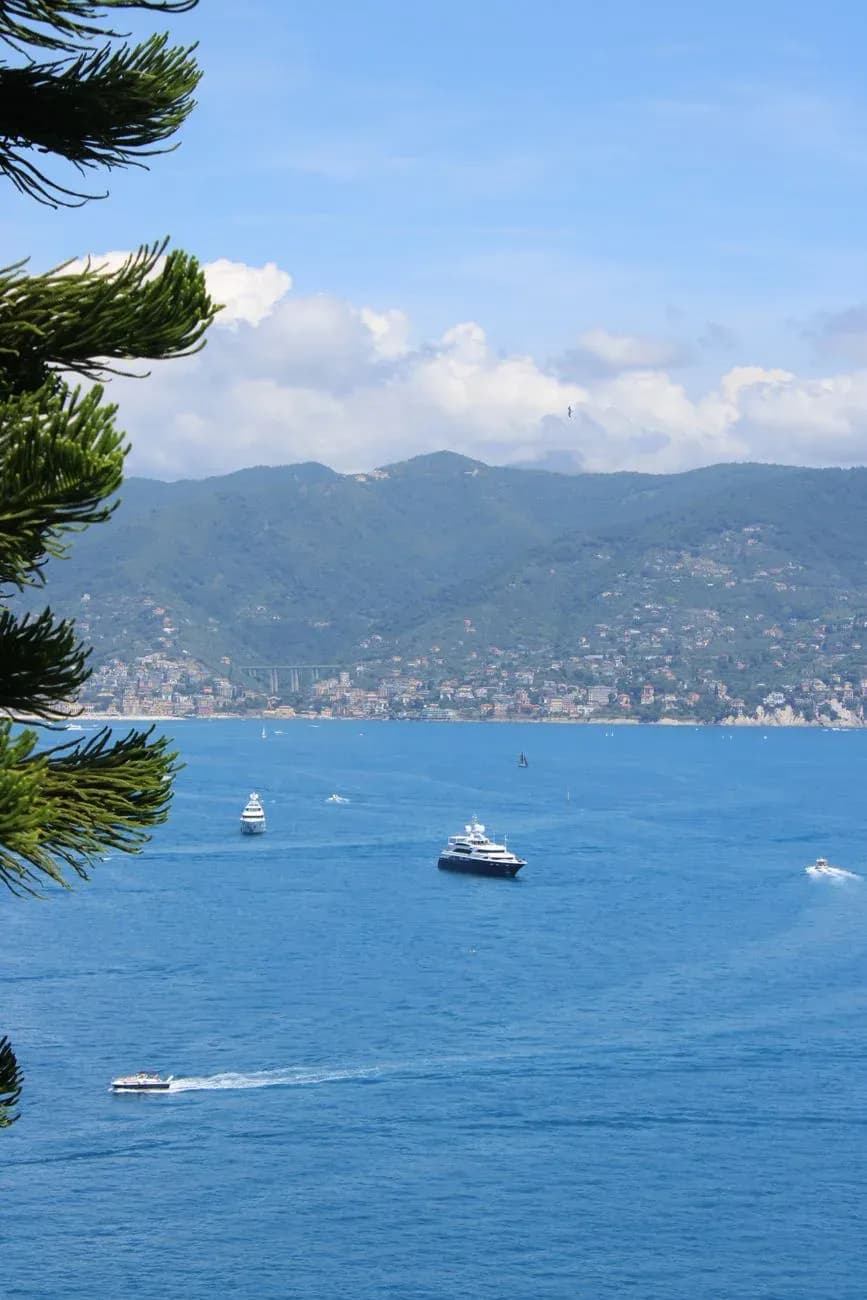
There is far more to this place than its famous music festival. Sanremo has two distinct faces: the elegant Belle Époque town, with its grand villas and lungomare, and the medieval settlement, tucked away among the steep alleys of the historic centre. To make the most of this atmosphere, the ideal times to visit are spring (between March and May) and early autumn (September and October). Mild weather during these seasons allows for long strolls or coastal bike rides without the summer crowds. During festival week in February, the town is effectively locked down, prices soar, and many shops change their opening hours.
Be prepared for plenty of ups and downs: while the coastline is completely flat and perfect on two wheels, you will quickly feel the gradient as soon as you head into the old quarter. The local cuisine is straightforward and honest, closely tied to both the sea and the Ligurian inland tradition, with focaccia, sardenaira, and fresh catch taking centre stage.
A 4-day itinerary in Sanremo
Day 1 — The grand drawing room and ancient alleys
Morning
Start your day by stopping by Storico Forno Barbruni in Via Gaudio. It is best to arrive before 10:30 to dodge the queues and grab a slice of sardenaira or traditional Ligurian focaccia. On foot, head towards Teatro Ariston in the Via Matteotti area, a true local landmark. If you wish to look inside, guided tours must be booked in advance. Continue your walk until you reach Concattedrale di San Siro, the oldest church in Sanremo, founded in the 9th century in the Romanesque style.
Afternoon
Venture into the district of La Pigna, the town's medieval core. Put on comfortable shoes: you are in for a walking tour of about one or two hours along caruggi and under stone arches, climbing constantly. Make your way up to Giardini Regina Elena, a terraced public park where you can enjoy panoramic views over the gulf and rooftops. Just above stands the Santuario della Madonna della Costa, a 17th-century Baroque building historically used as a landmark by sailors.
Evening
Stay close to the old quarter for dinner. Settle in at La Pignese in Piazza San Siro, one of the historic restaurants for Sanremo seafood cuisine, or, if you prefer traditional pasta dishes nestled among the caruggi, choose Spaghetteria Il Mulattiere.
Day 2 — Cycling along the Riviera
Morning
Today is tailor-made for hiring a bicycle and riding along the Pista Ciclabile del Parco Costiero Riviera dei Fiori. It is a 24-kilometre trail built on a disused railway line, linking Ospedaletti to San Lorenzo al Mare. Steering well clear of the traffic on the Aurelia, cycle in peace while soaking in the coastal scenery. Stop for a swim or a rest at Spiaggia dei Tre Ponti (in the eastern part of town), Sanremo's most popular sandy beach, which is also a favourite among surfers.
Afternoon
Heading back towards Corso Felice Cavallotti, dedicate the afternoon to the town's historic villas. Visit Villa Nobel, the final, Moorish-style home of Alfred Nobel: the visit takes about an hour and covers the museum and botanical grounds, but note that admissions are in the morning from Tuesday to Friday. If the timing does not suit, stroll around Villa Ormond e Floriseum, a terraced public park with a Japanese garden, centuries-old ficus trees, and the flower museum.
Evening
For an informal yet tasty dinner, drop by La Tavernetta in Via Palazzo, right in the heart of town, to sample Ligurian street food by the slice, particularly sardenaira and torta verde sanremasca.
Day 3 — Bussana Vecchia and the harbour
Morning
Head out towards the hamlet of Bussana Vecchia. This is a medieval village destroyed by an earthquake in 1887 and brought back to life in the 1960s by an artists' community. Allow roughly half a day to explore the art workshops and narrow alleys. Keep in mind that cars cannot enter: park near the cemetery or walk up from Bussana Nuova along the old mule track, allowing 30-40 minutes on foot.
Afternoon
Return to Sanremo and head down to the Porto Vecchio area to see Forte di Santa Tecla. It is an 18th-century fortress with a triangular layout built by the Republic of Genova, now used for cultural exhibitions. From here, stop by Piazza Alberto Nota for the Museo Civico di Sanremo (Palazzo Nota), which houses archaeological collections and the civic art gallery. In summer, evening openings are also scheduled.
Evening
Stay around Porto Vecchio for dinner. In Piazza Bresca you will find Ristorante Da Nicò - Trattoria del Porto, open since 1935 and specialising in Ligurian seafood dishes. Alternatively, just a short walk away on Corso Trento Trieste, Ittiturismo Patrizia serves the day's fresh catch and red prawns straight from the fishermen.
Day 4 — Late 19th-century elegance and the hinterland
Morning
Begin the morning with a stroll along Passeggiata Imperatrice on the western seafront, an elegant promenade paved in marble and shaded by palm trees. Looking onto it is the Chiesa Russa Ortodossa (Cristo Salvatore), with its distinctive onion domes, linked to the Russian nobility who wintered here. A short distance away on Corso degli Inglesi, step inside the Casinò Municipale di Sanremo, an Art Nouveau masterpiece opened in 1905; entry to the common rooms is free.
Afternoon
Spend your final afternoon exploring the hinterland in Val Nervia. Head to Dolceacqua, famous for the imposing Castello Doria and its characteristic humpback bridge, also painted by Monet. Allow around 40-50 minutes by car from Sanremo, or catch the local buses from Ventimiglia to reach this medieval village.
Evening
Head back to Sanremo for one last aperitivo overlooking the sea or for a final stroll through the quiet caruggi of the old town, taking home memories scented with focaccia and the sea breeze.
Practical planning tips
- To explore the historic centre, including La Pigna and the shopping streets, get around exclusively on foot. If you want to travel along the coast, hire a bicycle and make the most of the Pista Ciclabile dei Fiori to avoid the traffic on the Aurelia.
- On-street parking can be frustrating at weekends or during peak season. You are best off using paid multi-storey or covered car parks, such as Parcheggio Palafiori in the centre or those close to Porto Vecchio.
- If arriving in a camper van, you can park at Pian di Poma, a gravel rest area right facing the sea. From there, you can join the cycle path directly, reaching the centre in just a few minutes.
- Cars are not permitted inside Bussana Vecchia, and the open area in front of the village must remain clear. Leave your car lower down along the cemetery road, or walk up from Bussana Nuova in around forty minutes.
- For day trips into the hinterland (such as Dolceacqua or Apricale), bear in mind that you will need nearly an hour by car from Sanremo, or you will have to rely on bus connections from Ventimiglia.
Where to stay in Sanremo
Historic 5-star luxury hotel along Corso Imperatrice overlooking the sea, perfect for those seeking refined settings.
View on Booking →Historic Art Nouveau hotel with a wellness centre, conveniently located on Corso Imperatrice.
View on Booking →Comfortable seafront holiday apartments facing the harbour, ideal for immediate access to the cycle path.
View on Booking →